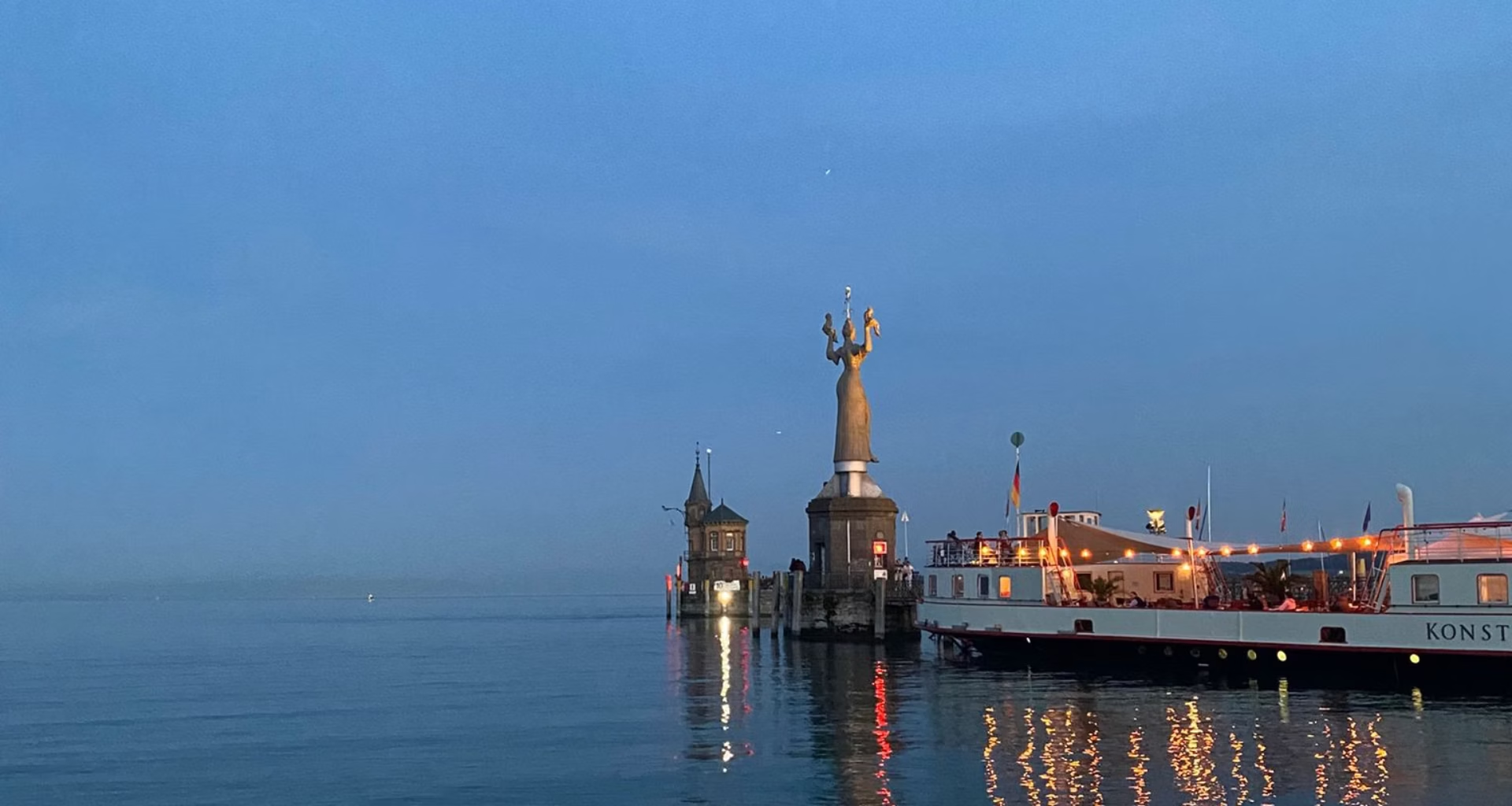


In two days to pack my next six months. Tomato sauce, biscuits, cheese, pasta, letters, warm socks for winter, my favorite mug. The empty apartment when I arrived, my parent’s tears on my shirt. We’ll see you soon they say, have fun, be careful. The next two days alone in a house that I don’t recognize, in a city that produces very little noise. What will I do for the next few months? Was it a good idea to come here in the first place? I call my girlfriend in tears; she says she’ll visit me soon, she reassures me, it’s going to be fine. I’m going to have fun, meet new students and find a new me. She repeats that several times, but those words for how true, sound foreign in my empty room.


Then, the first Stammtisch; Where are you from? How long are you staying here? What do you study? Where do you live now? Oh, that’s nice we can walk home together. Friends. Lots of them. In three weeks I meet the same amount of people that I would have met in ten years. They are all so different, their stories, they all have thousands of reasons for a common end, or better, a place.Their faces start becoming familiar, my appetite comes back. I feel safe again and seen. Invitations come, a dinner all together, friends of friends smile at me in the corridor, and my phone lightens up at every one of their text “Are you coming to Heimat?”, “Is anyone going to Backstage tonight?”.
Isn’t it interesting that for a bunch of months we all share the same life. Everything feels ordinary, a new routine reassures us. We talk about the same places, the same people and we complain collectively about the same stuff; the bus being late, the overpriced coffee. But eventually we’ll all go back to our own countries and probably never again pronounce the same words that in Konstanz were always in our mouths. I tried to, I swear, but I’m not able to romanticize my departure. Leaving hurts, and I’ll never get used to saying goodbye. I don’t want to say goodbye to my friends, I don’t want to see them on a screen after having shared rooms, tables and beds with them. I’ve been imagining the day of my departure since I hit half of my Erasmus and still haven’t found a way to react to it positively. I feel robbed; deprived of a possible version of my life, of myself. My parents say I’m much louder now, I ask more questions, I do things even if they scare me, I panic less, I listen more. I like myself a tiny bit more, even when I fail.
By staying here I learned to appreciate my own company. I ate countless times alone in my room – that before my amazing roommate arrived- I went grocery shopping alone and woke up in an empty house without anyone to say good morning to. I came to Konstanz because I realized that my home was growing on me. I was too comfortable and started to become lazy; I could predict situations and people very easily – I’m sorry if this sounds a bit arrogant – but at twenty I should not be able to do any of that. I needed space, I needed a place that would make me understand how small I am. Of all places, it is very ironic that I found my dimension in Germany. Years ago I was shedding bitter tears on my High School German book. I would have never imagined myself in this moment. And that’s the beauty of it, I’m so concentrated in planning my future ahead and I forget that some things simply come to me. In feeling tiny I understood that my life is not a book whose chapters have already been written. I know for sure now that I won’t live my life in steps. I won’t think of the goal, without considering the journey to take me there. I won’t live waiting for the next thing to come; my Bachelor’s, my Master’s, a job, then a promotion, then retirement. I will grasp every opportunity I have to make the journey more valuable than the end. And this takes me to the reason I’m writing this and I need someone to read this. I need to feel that in some way I’m starting this journey, that I’m creating something with my own forces.


This would be the space for a meaningful conclusion. A nicely put short paragraph that would end what was written until now on a good note. I’m very sorry, but I’ll disappoint you. I looked for it for weeks without finding anything that sounded true to me. And the last thing I want to do is lie to my reader or bore them. If I had to write something banal, something that you already knew, I would not have started in the first place. Instead, my solution is a short list of personal truths after spending six months in Konstanz. Just to not leave my article incomplete. Maybe you’ll find something interesting, or maybe our definition of “interesting” is simply different. It is possible that you’ll experience many bittersweet moments while in a foreign country, especially when memories intersect the present. It is possible that you’ll feel five different emotions all at once – if you are lucky – without being able to give any of them a name.
You’ll feel alone sometimes, especially when you have to make choices. Those who could give you a direction are too far from you now. It is you and you only. You’ll feel like you don’t belong here, maybe while sitting in class, thinking that you are occupying someone else’s space (you don’t by the way, you are where you need to be). It could happen that you’ll feel more at home in your Erasmus house rather than in your own. If that happens don’t feel guilty and you don’t need to explain yourself. But If you need something to tell your family or your friends you could steal my words, I won’t be offended; in Konstanz I found home in myself, which is something I could not have done with my parents around, always there to support me and care for me. You’ll learn to let go, to not let emotions stay with you for too long when they’re poisonous. You’ll learn to grasp the moment, to stop controlling, analyzing what is around you with the hope to find some unequivocal truth behind it. You’ll learn to move. To always move in some direction even if you don’t know exactly where it’s going to take you.